Fracture Points: The Real Cause of Family Conflict Isn’t What You Think
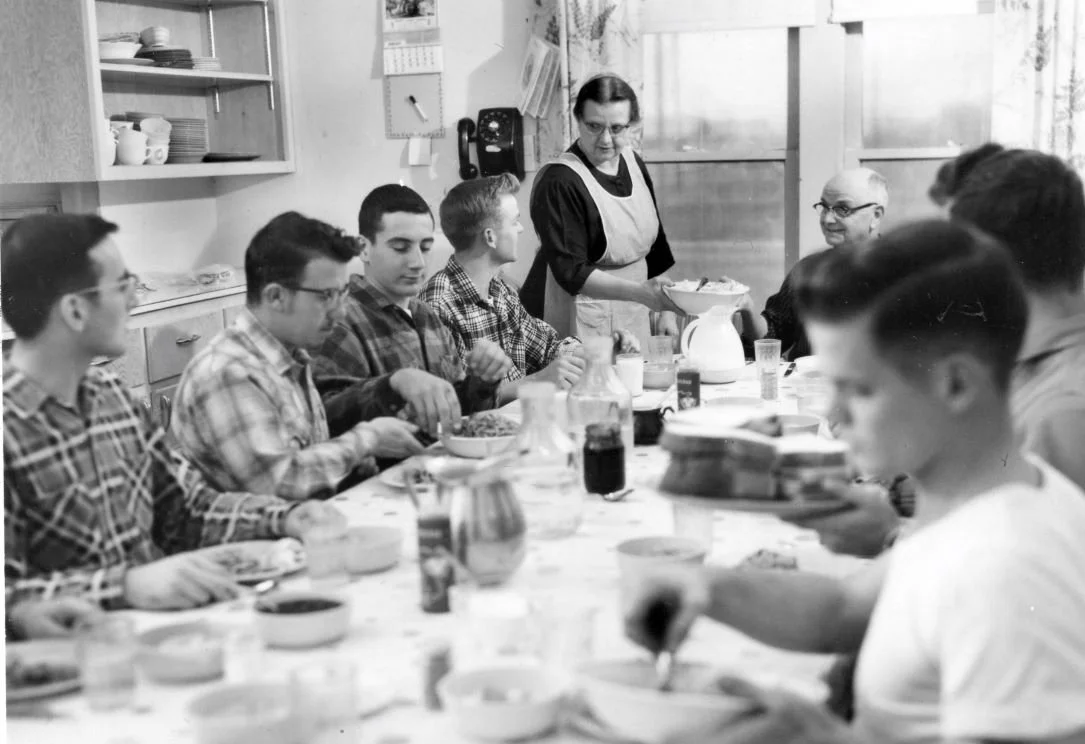
Understanding the human dynamics beneath conflict — vices, emotions and behavior — helps clarify why fracture occurs in family enterprise. Economics and governance determine how much damage it does. Photo: Alvin Hostetler.
By Amy Hatfield
When conflict threatens the life of a family enterprise, the matriarch is often the family member who suffers the most grief. She is the mother and nurturer, and above all else, she has her eye on a peaceful and loving family. For her, success is rarely defined by generational wealth or a favorable P&L report.
In the years i3 has spent working with families in business, we’ve noticed this grief tends to be shaped by disillusionment, too. After a particularly painful family break, an aging mother of four adult children, all active participants in the family business, said, “I cannot believe how utterly useless and divisive this business and all of its money have turned out to be.”
She and her husband, the enterprise founders, had spent the better part of their lives working unforgiving hours, under unrelenting pressures. Despite years of near financial collapse, they had come out on the other side, having succeeded beyond their own expectations. And their reward? A family home in the shadows of conflict, disorder and fracture. A dining room where holiday meals are endured not cherished; and the taunting chasm between the idea of a successful family business verses the reality of what it sometimes turns out to be.
If you were to steal a quick glance through an outside window, unnoticed, their family gatherings would look like love, a real Norman Rockwell work of art: A table set with fine China, place cards written in an elegant hand, a beautiful centerpiece and pressed linen napkins. Christmas dinner is $400’s worth of beef tenderloin. All the fixings are perfect, and ... everyone at the table wishes to hell they were somewhere else.
It’s all so messed up. Because these are people who love each other. An aging mom and dad, grown children, their spouses and the grandchildren — all situated dangerously close to the edge of so many layers of anger and emotion. And yet, in an instance, one or more loved ones might fall into prolonged estrangement.
So be it.
But, then, maybe not. This probably isn’t what the members of this family really want. Because there’s the pull of what’s familiar. These people know each other so deeply: their kinship, shared history, successes and failures, the long memories. There’s the stuff these siblings or cousins did together as kids — childhood ramblings that were equal parts hilarious, innocent, dangerous, pure, irresponsible, exhilarating.
But by the time these kids are now adults and they're all seated around that holiday table, there’s something else: mistrust or doubt, unfair mistreatment of one sibling, biased favoritism of another, a meddling in-law, an entitled cousin. It’s a family dinner where even the blessing has devolved into propaganda. A bit of message to make a poorly veiled point, by a father who simply does not have the language or the know-how to say the things that must be said.
And as each family member stands around the table, heads bowed, with so much distance between them, they share a collective thought, “how long of a visit is long enough on Christmas Day?”
Fractures Are Not Failures
It does not matter how honorable or wealthy or Christian your family is. Family relationships are too complex for fractures to be avoided entirely.
The first step toward addressing them? Acceptance. As Flannery O'Connor wrote, "The truth does not change according to our ability to stomach it." Fractures are inevitable because conflict is woven into the human condition itself.
Yet families are not tasked with solving the human condition. Instead, they must begin with a different belief:
The path forward exists not in spite of the darker angels of the human heart, but because we are willing to accept and address them without shame, pretense, positioning or posture.
When we successfully adopt this belief, the behaviors that block relational harmony begin to fall away and a clear path emerges.
Fractures Are Not Single Events
A fracture point is not a single argument, decision or event.
“I think most families look at their unique conflict and say, ‘Well, it was the family farm that caused the fracture,’ or ‘It’s the drug habit of a nephew who has a significant role with the enterprise,’” said Kevin Heaton, i3’s founder and principal. “It’s things like that, specific moments that shoulder the blame for the fracture. But it’s the response to those events that cause the fracture, not the events themselves.”
Related: Independent Pieces Become a Thriving Collective
Right away, this focus on a single argument or event distracts from acceptance, which delays the important work of addressing the fracture’s root cause. Once a family puts its focus on the event — the argument, the drug problem, the tangible thing that offers a straight-forward solution — the underlying cause never gets the attention it needs, and productive dialogue never happens.
“Families tend to call us when there’s been a major change or transition. Early in our relationship with a family, these fracture points often become an area of focus,” Heaton said. “Typically, there are three stages: first, identifying the chaos; second, working through the response based on the desired end state; and third, developing an action plan.”
Within the chaotic environments that emerge following significant or unexpected change, toxic emotions (usually prompted by vices like envy, entitlement or pride) can fester. It’s at this point that family members will begin to position and posture.
“What is positioning; what is posturing,” Heaton asked. “Those are defensive moves. And defense pushes against progress.”
It’s at this stage that families typically stall. They don’t know what else to do, and there is no “next move.” The enterprise founder or leadership group is looking for an objective voice in the room, a third party capable of bringing the temperature down.
Heaton says he works with families to consider the opportunities that fracture points create. However, not all opportunities offer good outcomes for everyone.
“We don’t go in and put a lot of focus on different communication styles and what style works best in what situation,” he said. “Instead, we’re looking for useful answers to determine why or for what reason a family member is positioning or posturing and to what end.”
In most cases, families will make progress and find a path forward by working through their preferred end state. This approach captures the essence of the idiom, “Shoot for the moon. Even if you miss, you’ll land among the stars.”
“My job is to help families envision what they ultimately want, then wrap it in a governance framework that allows them to get there,” he said.
Well-designed policies and processes reduce confusion and provide steadier footing when pressures rise. This is where economics and control matter most — not as solutions to human vices, but as guardrails that shape how those imperfections express themselves inside a family enterprise.
Pure Causes
The condition of the human heart can be understood by what Heaton classifies as “pure causes” — greed, pride, envy, wrath, sloth, lust and gluttony. These traits are also known as “capital vices,” or you may recognize them as the Seven Deadly Sins. In the words of historian and author Lars Brownsworth, "You won't learn the appropriate lesson if you misdiagnose human nature.”
If you prefer a framing that draws from the principles of psychology rather than focusing on one’s “sins,” there’s also Carl Jung, whose work shaped modern psychology of the unconscious. He framed the duality of human nature this way: “Everyone carries a shadow, and the less it is embodied in the individual’s conscious life, the blacker and denser it is.” Essentially, suppression intensifies harm.
“What is wrong with the world is not first its systems, but its people,” wrote Christian apologist and novelist C.S. Lewis. After all, people are people. And family relationships bare out the flaws of the human condition as well and as often as any other human relationship.
There’s the biblical, one-sided rivalry of Cain toward his brother Abel, fueled by comparison and resentment; and the truer rivalry — a two-sided dispute — between Isaac and Esau. Quickly fast-forward to the 20th Century, and we’re soon reminded that even our fiction is colored by our lived experiences and the fractures of family enterprise. Many of us found ourselves spending Friday nights in the 1980s with J.R. Ewing and the hit television series Dallas. Ewing suffered from the same tried-and-true human failings that disrupt relational and financial harmony: pride, greed, deceit, envy. He relied on manipulation and half-truths, both closely related to the posturing and positioning Heaton cited as early signs of fracture.
For real-life, more-recent examples of family disfunction, we give you the Barclays (commercial espionage), the Guccis (tax evasion traps) and the Schottensteins (elder financial abuse).
If you’ve read this far because you’re torn up about your own family’s fractures and impasses, there’s nothing like the salve of seeing others flounder in bigger and more perverse ways than you.
Predictors: Reframing Fractures as Useful Signals
Now if you can begin to accept the inevitability of the human condition rather than dismissing it as phycological or spiritual fluff, its resulting emotions and behaviors will serve as useful signals.
This mindset boils down to seeing things less emotionally, more clinically.
“It becomes more about, ‘hey, where are these things going to raise their heads,” Heaton said. “Not if things are going to raise their heads. And also, if we understand we’re dealing with pure causes that aren’t unique to any one family, then we skip right over the part where a family feels guilt or shame for allowing a dispute or fracture to happen or causing it to happen. Once that’s all out of the way, the focus lands where it should, making sure a family is prepared for how to respond.”
What matters is not a fracture’s novelty, but the predictability of it. Before families experience fracture openly, they adapt quietly through observable behaviors or signals. There are countless examples, but here are a few:
Any type of change or transition is a reliable predictor of fractures. These might include changes in financial condition or aging family members.
A family might notice the recurrence of the same issue without resolution. Decisions appear to be made, but the underlying disagreement resurfaces in different forms. Over time, this repetition erodes confidence, and family members begin to doubt that discussion will lead to anything productive.
Another signal is triangulation — when concerns are voiced indirectly through spouses, siblings or advisors instead of directly addressing the person or people involved. Side conversations begin to replace shared ones, often in the name of keeping the peace.
Family members may also notice subtle changes in tone during otherwise routine decisions. Discussions become sharper, more guarded or unusually formal. What once felt collaborative begins to feel positional, even when the subject matter hasn't changed.
Avoidance is another indicator. Certain topics, individuals or decisions are quietly taken off the table. The absence of discussion is often interpreted as stability, when in fact it reflects narrowing tolerance for disagreement.
Governance and enterprise-related signals might include: A preference for informal agreements over clear processes; family issues that are “handled privately,” even as they affect business outcomes; a widening gap between what’s said publicly and what’s believed privately.
These signals aren’t meant to suggest a family enterprise is eroding. They’re just indicators of tension. View them like a pitcher who’s tipping his pitches. The tip gives you a reliable clue about the pitcher’s grip and the trajectory of the baseball as it leaves his hand. It can serve as a reminder that the choices made next will matter.
“The families who do this well know how to respond because each family member shares the same end-state goal. Without a common vision, then all things perish,” Heaton said.
He’s also found that those families who are grounded in their faith tend to navigate fractures well, along with families who project an easy sense of self and a less-emotional disposition. “These traits are constructive because they allow families to recognize and address predictors and patterns in a straightforward way that’s without defensiveness or judgment.”
Shame Is a Trap
A vice creates negative emotions, and each emotion can ignite unwanted behaviors. These emotions might include fear, resentment, insecurity, contempt or entitlement. Then there’s shame. And shame warrants special attention.
Shame does not announce itself. It never enters through the front door, always opting to slip in through the back. So even as many families in business are intuitive people who readily recognize when something is wrong, shame can go unnoticed or unrecognized, while the individual who’s actually feeling the shame, pushes it down, too ashamed to address it. And in spite of a perfectly adequate command of the English language, family members often lack a shared and usable nomenclature for naming it and dealing with it openly.
Why? Because that’s what shame does — it blocks progress by drawing you into a trap of silence. It masks and covers.
“When shame is involved or there’s embarrassment at play, other bad decisions almost always follow,” Heaton said. “But when you have families who understand how to lead with respectful candor, they can address fracture, even when it’s fueled by deeper more challenging emotions like shame. And they move forward.”
Related: Making a Case for Workplace Candor
When addressing shame, family members are often caught between being overly cautious and failing to say what they actually mean or, conversely, they’re too sharp‑tongued and abrasive, aiming to “get it over with.” Candor is about finding that sweet spot, the respectful middle-ground that balances honesty and empathy, truth and grace. Done well, it can disarm emotions like shame so progress is no longer blocked, vices can be named and resulting wounds healed.
From there, manageable questions of assets, control and timing can be addressed with greater clarity.
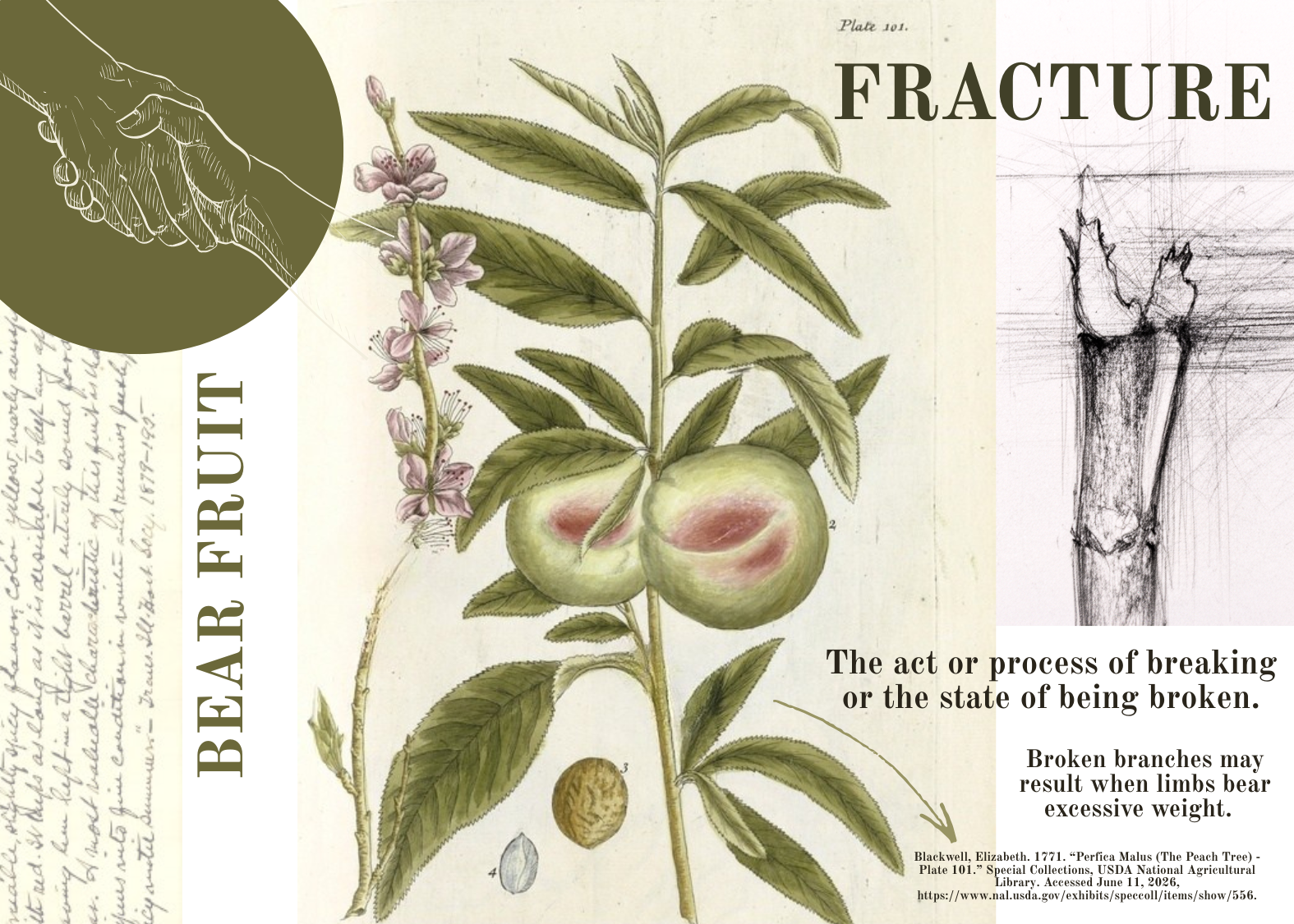
When family fractures and frictions go unchecked, it’s like a fallow field. Without proper cultivation and the deliberate development of an ecosystem, unwanted vegetation takes root and competes with or overtakes the fruit-bearing plants.
Designing Governance to Limit the Damage
Understanding the human dynamics beneath conflict — vices, emotions and behavior — helps clarify why fracture occurs. Economics and governance determine how much damage it does.
“There’s the control side and the economic side,” Heaton said.” The control side is a family’s governance and, of course, the economic side is money, the family’s finances. Firms like ours often focus on the financial side. It’s easier, cleaner and — especially for people in our industry — it’s the area we’re trained to address through our educations and professional experiences. But, honestly, you learn quickly, you can’t really help families in business unless you help the families themselves by strengthening the relationships these businesses are built on.”
Fracture points typically intensify where economics and control intersect. After all, assets carry more than financial value. They confer authority, permission and influence. As a result, friction flashes when that relationship is unclear, unevenly understood or quietly contested.
These fractures and frictions can be minimized through sound governance.
"Well-designed policies and processes reduce confusion and provide steadier footing when pressures rise,” Heaton said. “This is where economics and control matter most — not as solutions to human vices, but as guardrails that shape how those imperfections express themselves inside a family enterprise.”
Wealth Creates New Challenges
As families accumulate wealth, greater complexities follow. Free cash flow is often reinvested into filing cabinet assets: commercial real estate, undeveloped land, agricultural acreage, operating businesses, private investments or shared-use properties. Over time, these assets multiply entities and compound decision points and expectations.
While this growth signals success, it also complicates generational tax planning and invites the expanding involvement of family members. These periods of expansion and success tend to out-pace an enterprise’s governance and operational systems and processes. A lack of clarity is one common result, largely due to internal communications that haven’t adapted to support the free flow of information and a clear understanding of expectations across family members.
Many family enterprises experience this strain most acutely as they move from Generation 1 to Generation 2. Authority diffuses and assumptions aren’t as reliable as they were when the business was smaller and less people were involved. Questions that once lacked urgency are now sitting right in front of you. Who decides? Who benefits? Who bears responsibility?
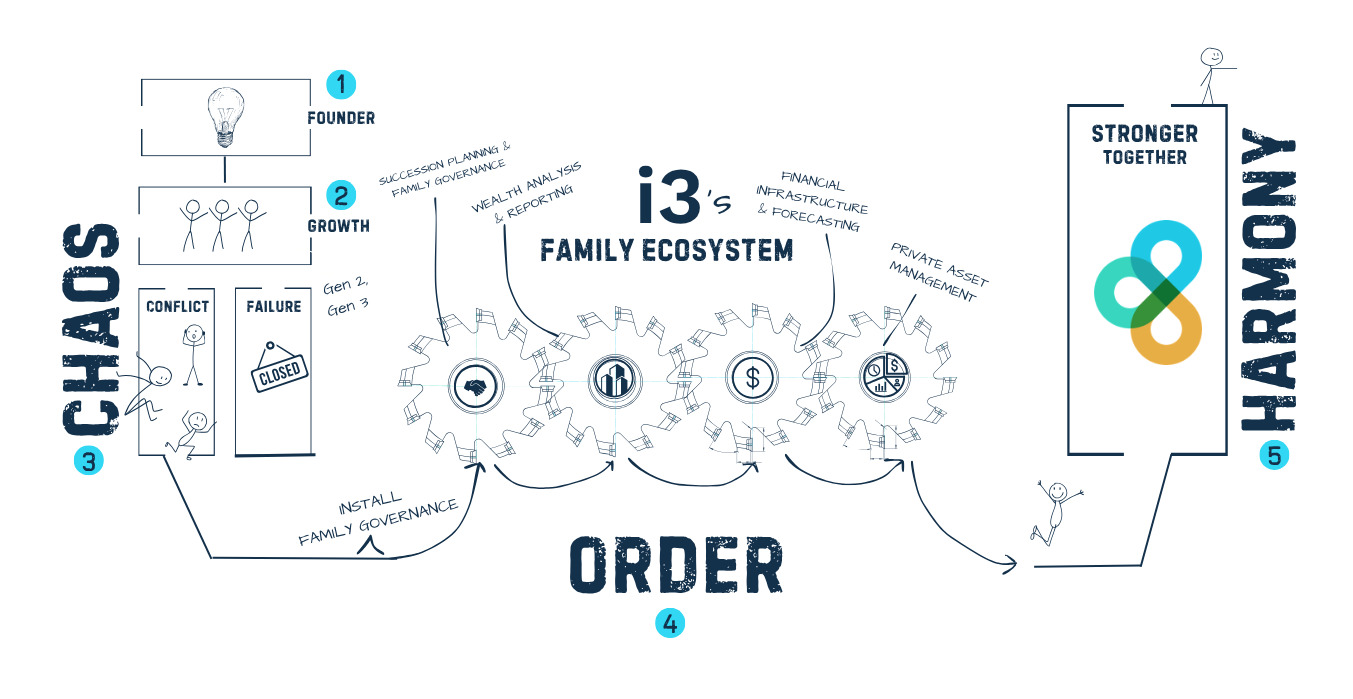
Bringing Order Out of Chaos
When questions like these are left unanswered, frictions go unchecked. It’s like a fallow field. Without proper cultivation and the deliberate development of an ecosystem, unwanted vegetation takes root and competes with or overtakes the fruit-bearing plants.
Without order, chaos prevails. Vices thrive and fracture points surface.
“A family ecosystem does not promise harmony, but it does make room for enough harmony that families can remain intact and effectively address the financial challenges and interpersonal conflict that threaten long-term wealth preservation and growth,” Heaton said.
At its core, this ecosystem treats the three “i’s” of i3 — information, infrastructure and investment — as interdependent, symbiotic units, rather than separate, independent pillars.
“Effective governance aligns economics and control in a way that frees families from the strain of improvising under pressure,” he said.
When families rely on clear definitions of who has authority and what decisions belong where, decision-making becomes “business as usual.” Even more, these clear decision rights and built-in accountability create a durable operating rhythm, limiting how much damage fractures can do.
And finally, arguably the best part: When the damage is limited, conflict stays at the office where it belongs, and mom’s holiday table is the loving and abundant gathering place Norman Rockwell intended it to be.
For readers seeking a more detailed understanding of how i3 works with family enterprises to develop well-designed governance policies and processes, you can reach us through our contact page or send us an email at info@i3resources.com.
Featured photo: Anna Brilhart serves a meal to her hungry family in Hesston, Kansas, 1959. Credit: Alvin Hostetler
What’s Next