The Price of Admission

Why we’ve spent years investing in our own operational software and what that decision may signal for family enterprises in the years ahead. Image: State Library of Queensland/i3 illustration
By Amy Hatfield
Editor's Note: This article is a continuation of our Digital Sovereignty series. Previously, we explored how family enterprises and other businesses came to rely on subscription-based software and why AI may make software ownership practical again. This installment examines why i3 has spent years investing in its own operational platform, RAAMP, and what that decision may signal for family enterprises in the years ahead.
A changing digital landscape in the early 2000s made a migration from disks and hard drives to software subscriptions and clouds our most feasible option. So we evolved, gave up ownership in favor of renting our operational tools, adapted and carried on.
Now, AI is changing things once again. This time, instead of moving our digital operations to subscription-based models, it offers the possibility of building what we want and owning it. With it, middle‑market companies can regain control of private information and internal operations — if they want it.
Many will stick with what’s proven: An approach that’s imperfect, but functional. i3, a middle-market financial firm based in South Carolina, will not. In this article, we offer three reasons why:
i3 is building its own operational software when plenty of online platforms already exist;
i3 believes AI now makes software development and ownership possible for small businesses and middle-market companies;
Family enterprises will help lead a shift from software rental to software ownership fueled by a preference for invention over convention.
REASON #1
There is not one single software that can get the job done.
As he often does when working with client families, i3 founder and principal Kevin Heaton starts at the end and works backward. In family governance and succession planning, one of the early questions for each family member is, “What do you want to see when the ‘end state’ is reached?” It captures the essence of the idiom, “Shoot for the moon. Even if you miss, you’ll land among the stars.”
Heaton’s job is to help families envision what they ultimately want, then wrap it in a governance framework that allows them to get there. He’s applied this same approach to i3’s operations and the software that supports it. “I’m thinking, if I forget the cumbersome details of onboarding a new system, the integration, setting up our processes, forget costs and any other pain points, then what do I want?”
Related: Families Are Stronger Together
When you start at the end, after decisions have theoretically been made, it’s easier to imagine howthings works in day-to-day uses and how they perform across tasks within a typical workflow.
“I always come back to the same basic, simplified question, ‘What one software will do what I need?’ And the answer is always the same: none.”
This is true for many companies, but most of us — including i3 — have accepted the marketplace’s limitations out of necessity. While many platforms perform individual functions well, it’s rare to find a single software that provides a complete operational infrastructure. And this is part of the rub.
Soon, your company is piecemealing things together, which is also when application programming interfaces (APIs) enter the conversation. APIs create access so information can move across software, which becomes a company’s tech stack.
But these connections are like tying one boat to another when dock space is limited. Boats line up, each one further from dock. Passengers can move across from one to the other, but the boats bump and move and drift further apart, then tight and converging, before separating and diverging again, so there’s no fluidity. Each boat operates as it should, but the collective unit is glitchy.
For software platforms tied together by APIs, data can move, but there is little control over how systems behave together. In family enterprises, this lack of fluidity often appears where governance, operations and reporting intersect. Financial data may live in one system, ownership records in another, payroll or distributions in a third — requiring manual reconciliation to answer basic questions about cash flow, profitability or family obligations.
“We’re trying to get this piece to talk to that piece,” Heaton said. “We want these platforms to work the way we do, but we usually end up working the way they do.”
When standardized platforms fall short, workarounds emerge. Over time, this reinforces reliance on institutional or tribal knowledge, complicating succession planning and governance over time. For families in business, refined operational infrastructure is not a nice‑to‑have. It underpins governance, communication and stability — inside the business and across family relationships.
REASON #2
Coding will soon be AI-driven.
The gap between how we develop software today and the AI-driven development of the future is a rapidly shrinking gap. Even more, its impact is less about how a product is made, and more about how this will shift strategic planning for organizations like i3 and the family enterprises it serves.
Related: Digital Sovereignty: What Took Us So Long?
According to CIO, a publication for tech executives, “The organizations that recognize this shift early will not just move faster — they will compound intelligence faster, creating asymmetric advantage in markets where speed alone is no longer sufficient.”
To capitalize on these emerging opportunities, i3 has spent years developing RAAMP, its ERP (enterprise resource planning) platform. Built on an i3-owned codebase, RAAMP combines many of the functions companies typically spread across multiple software subscriptions, including finance, operations, reporting and human resources.

“RAAMP’s codebase is essentially the operational tools we will own, not rent,” Heaton said. “And if I can invest in creating my own software, a platform that’s uniquely built for the operating needs of i3 and our client families, it’s worth it. Not just to me, but it’s worth it for the durability of our firm and the advantages it gives us.”
The years-worth of work and financial investment put into building RAAMP now puts i3 in an enviable position. It’s a position of readiness.
This readiness is, in part, due to how RAAMP’s codebase is written.
“It’s pattern-driven, organized and modular,” said RAAMP President Landrum Randolph. “This allows effective and economical collaboration with AI agents. In turn, software maintenance, improvements, additions and fixes can be easily delegated to cost-effective, AI-driven development.”
Meanwhile, the institutional knowledge and unique operating needs and complexities of family enterprise have been documented over time, establishing a roadmap of reason to contextualize each tactical decision made during the build.
This is a key differentiator.
“Oftentimes, architectural choices live in Slack threads or linear tickets or just in someone’s head,” wrote venture capitalist Chamath Palihapitiya in a post on X.
Palihapitiya has written extensively on how software development is changing as AI becomes embedded in the process. He believes the missing piece won’t be coders or even writing code faster, it’ll be the system architecture. “A good, multiplayer version of the software development experience would capture the ‘why’ layer, not just execute the ‘what’ faster.”
REASON #3
We accept the pain of invention over the constraints of convention.
The decision ahead isn’t really about software. It’s about how each company intends to operate in an AI-driven world. Some will continue renting the tools that run their businesses. Others will choose to own them. Neither approach is inherently right or wrong; the answer depends on the enterprise itself.
So how do you know which way to go? For us, choosing meant stripping the question down to first principles. Once we stopped comparing software platforms and started focusing on outcomes, the answer became much easier to see.
A story from an unlikely corner of the music industry illustrates what first-principles thinking looks like in practice.
One of the bestselling concert t-shirts of all time nearly didn't exist. Convention offered an obvious answer, but it failed to answer a more important question: why the shirt should exist at all.
Rapper Kayne West didn’t want to sell merchandise of any kind on his 2016 Saint Pablo Tour, not even T-shirts. Scooter Braun, his manager, was really convicted about it. He kept bringing it up, trying to persuade West. Selling merch at concerts is kind of what one does. But West didn’t want to touch it. At the time, he wasn’t nearly as polarizing or unhinged as he would become, and he was trying to position himself as a music icon and fashion designer. Concert t-shirts didn’t fit his brand narrative.
The rapper needed a reason why, so Braun gave him one. When he was a kid, his dad took him to a bunch of concerts, and he’d save the tickets, collecting each one in an old chest. “Kids get merch now because they don’t have the ticket. It’s all digital.” And there’s your basic truth.
In that moment, Kayne West got it. He had his reason and, on the spot, he designed a simple T-shirt with the word “admission” written across it. He put the date of the show on the shirt, and said, “there’s your merch.”
This shirt wasn’t about something to wear, it was about something to hang onto, take home, keep.
According to Braun, the T-shirt went on to break “every single merch record.” We may not know the actual sales numbers or what records were broken, but we do know that, in one night alone at Madison Square Garden, $780,000 worth of “admission” T-shirts were sold.
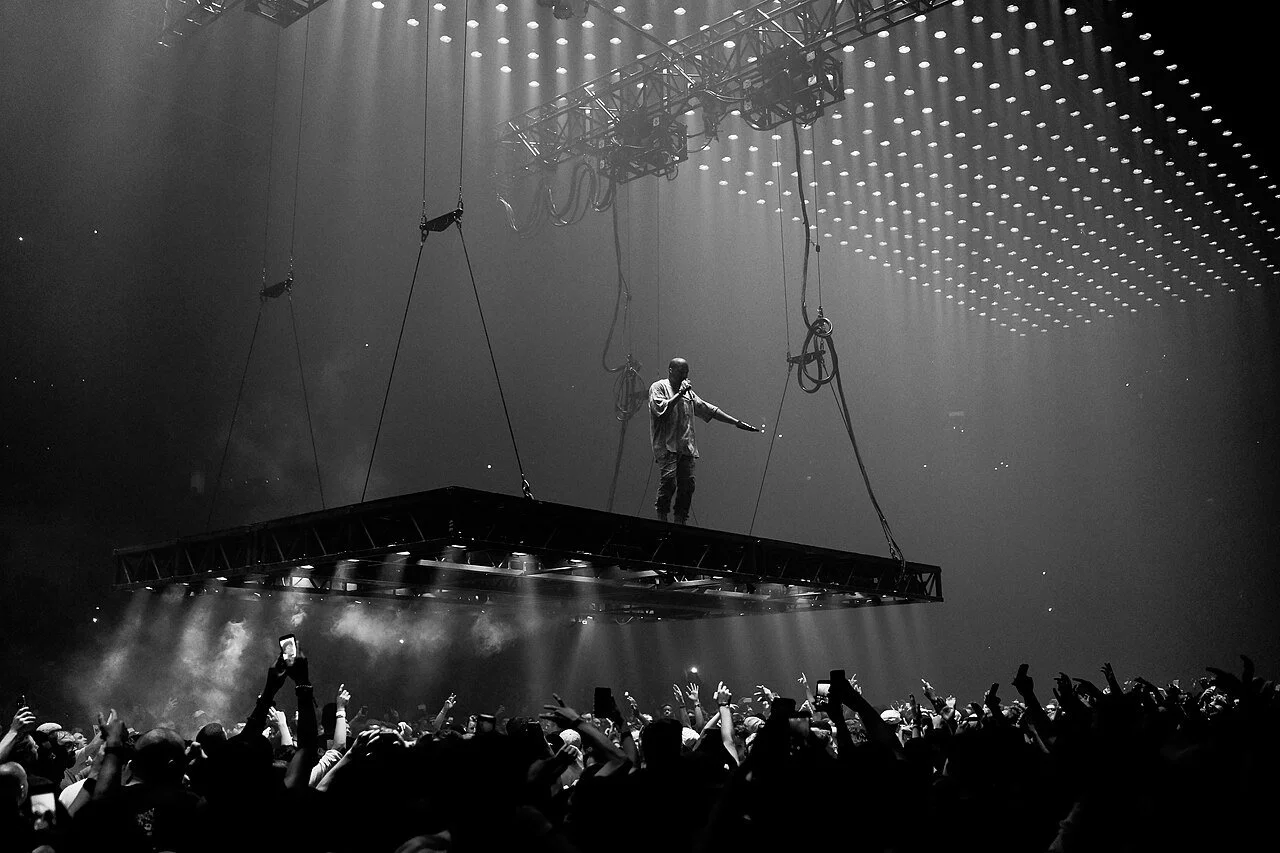
In this story, you can see the power of asking “why” and the benefit of moving past the default answers to get to the difference-making truth. Once the “why” became clear, convention lost its authority. In this same way, i3’s commitment to building and owning RAAMP did not come from an interest in software development. That’s the assumption that leads to default answers. Instead, i3’s investment in RAAMP is about a company’s desire to own its own operations and seeing an opening to do it.
And the merch itself offers a helpful parallel, too. Just as the “admission” T-shirt served as a substitute for a printed ticket, RAAMP exists to replace something that quietly disappeared: Software as a Product (SaaP), housed on servers or hard drives i3 controls. This setup also ensures we have ownership and command of our own financial and other private business documents and materials.
Still, opting for invention and a new way of doing things isn’t the obvious choice in every circumstance. Willingness to resist convention should be based on conviction (which predicts commitment and stamina), the degree of need for a solution that doesn’t currently exist and the potential for return, which is different for every company.
“You have to be OK with the inefficiencies of trial-and-error, which is what building something new relies on,” Heaton said. “For software development, you have to be OK with the errors, the broken links, the flaws. You have to be willing to accept the pain of invention.”
For i3, this investment makes sense. Heaton recognizes his role as an early adopter, and the varying stages each company finds themselves within this new paradigm of AI and software development.
“You know, we’re doing this, but abandoning convention has consequences, we get it,” Heaton says. “There will be a few of our client families whose degree of need and potential for return are aligned with ours. What we want to do is communicate our reasons why and make RAAMP available to those who can benefit and realize measurable gains from our efforts.”
Currently, i3 is forming a network of like‑minded family enterprises to align RAAMP’s architecture with emerging AI capabilities, creating shared operational efficiencies that each company can own and control. To learn more, you can reach us through our contact page or send us an email at info@i3resources.com.
Inline photo: Kayne West performing at the Saint Pablo Tour in 2016. Photo credit: Kenny Sun
What’s Next